Attorney-driven discharge is now possible
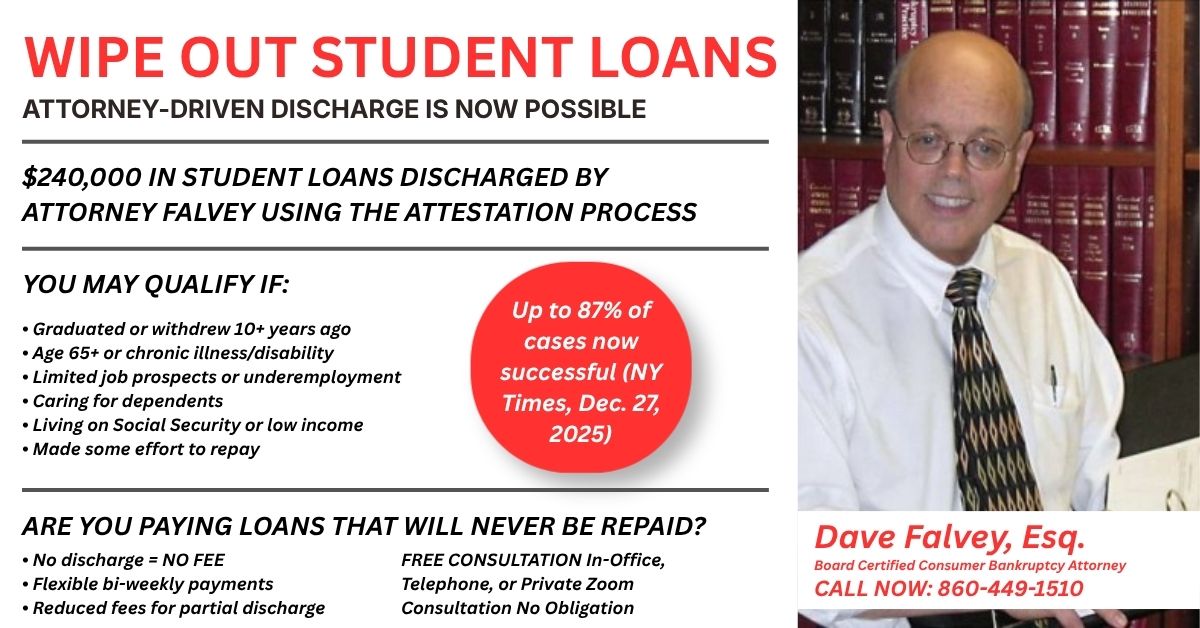
Attorney Falvey has discharged over $240,000 in student loans through the attestation process.
Dave Falvey, Esq. — Board Certified Consumer Bankruptcy Attorney
You may qualify if:
- Graduated or withdrew 10+ years ago
- Age 65+ or chronic illness or disability
- Limited job prospects or long-term underemployment
- Caring for dependents (including dependents with special needs)
- Living on Social Security, fixed income, or low wages
- You have made some effort to repay (for example, income-driven repayment or payments toward the loans)
Temporary hardship is usually not enough on its own. Courts look for a structural, not short-term, inability to maintain a minimal standard of living while repaying. We help you document and present your facts clearly.
Are You Paying Loans That May Never Be Repaid?
- No discharge = no fee for the discharge action.
- Flexible bi-weekly payment options are available.
- Reduced fees may be available in partial-discharge outcomes.
Free consultation: In-office, telephone, or private Zoom. No obligation.
Call now: 860-449-1510
Act now — this program could change at any time.

Good news for borrowers
The New York Times reported that up to 87% of student loan discharge cases in bankruptcy are now successful.
Wipe Out Your Student Loans
Attorney-driven discharge is now possible.
Student loan discharge is more accessible than many people think when your case is prepared the right way.
With the DOJ's updated guidance, more borrowers are getting real results through bankruptcy-based discharge actions.
Recent outcomes can include significant six-figure relief in qualifying cases through the attestation process. Results vary by case.
We can review your situation, explain your options clearly, and help you move forward with confidence.
How It Works
- We review your current financial picture and bankruptcy timeline.
- We prepare your discharge strategy and supporting hardship facts.
- We handle the legal filing process and guide you step by step.
- No student loan payments are required while the case is pending.
- If you qualify, your student loans can be discharged by court order.
Who Qualifies To Discharge Student Loans?
You may be a strong candidate if one or more of the following applies to your case:
- You have had your loans for many years and still cannot afford sustainable repayment.
- You graduated or withdrew 10 or more years ago and your balance remains unmanageable.
- You are age 65 or older, or have chronic illness or disability affecting long-term earning capacity.
- You are underemployed, have limited job prospects, or are supporting dependents.
- You rely on Social Security or other fixed low income.
- You are dealing with long-term health, disability, or income limitations.
- You have made good-faith efforts to pay, including income-driven repayment attempts.
- You are filing now or have already filed bankruptcy and want to evaluate next steps.
Every case is fact-specific. We review your records and help determine whether a discharge action is practical in your situation.
Get a Student Loan Review
Common Questions:
Can student loans really be discharged in bankruptcy?
Yes. In both federal and private loan cases, discharge is possible when repayment creates an undue hardship and the evidence is properly presented to the court.
What is specific to Connecticut bankruptcy cases?
Connecticut filers proceed in the U.S. Bankruptcy Court for the District of Connecticut, and student loan discharge is handled through an adversary proceeding under federal bankruptcy law.
Does Connecticut use a different hardship test?
Connecticut is in the Second Circuit, where courts generally apply the Brunner undue-hardship framework. Strong documentation and a clear hardship timeline are important.
How long can a discharge case take?
Most cases move over several months, depending on filing timing, document readiness, and court scheduling.
Do I have to do this alone?
No. We guide you through strategy, filing steps, and documentation so your case is presented as clearly and strongly as possible.
Will this replace legal advice about my exact case?
No. This page is general information only. A consultation is the best way to evaluate your exact eligibility and timing under current law.
 860-449-1510